US Deploys Third Aircraft Carrier and Thousands More Troops to Middle East
The US is sending a third carrier strike group and up to 10,000 additional personnel to the Middle East, as President Trump signals possible escalation in the ongoing conflict with Iran after the November midterm elections.
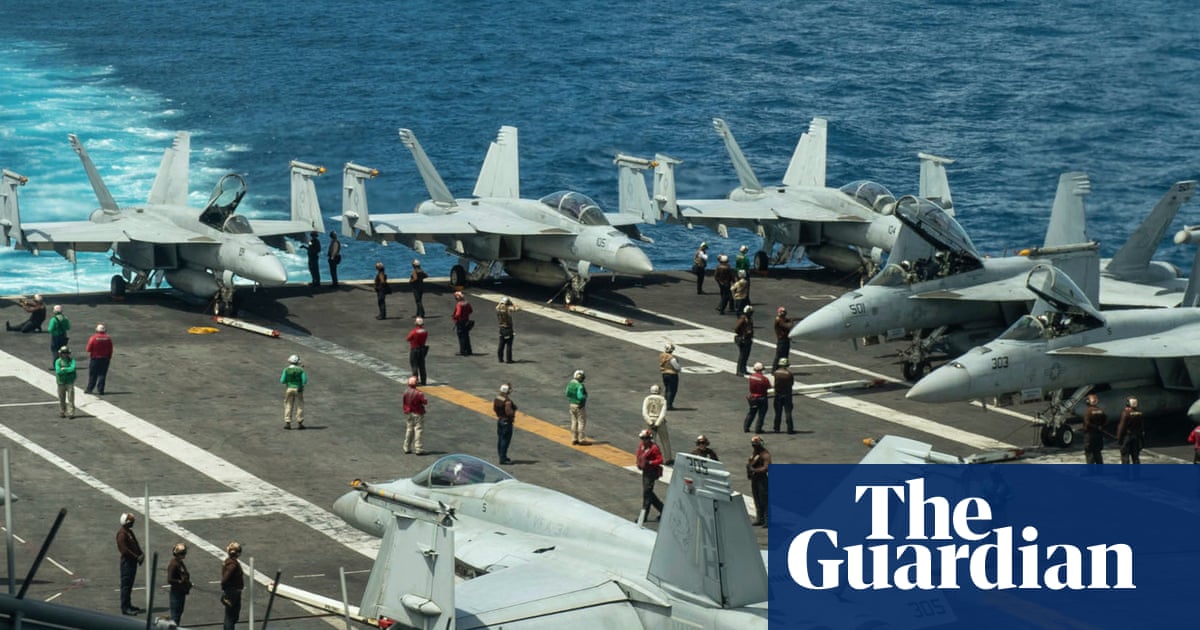
The United States will deploy a third aircraft carrier strike group and up to 10,000 additional troops to the Middle East, US officials told The Wall Street Journal and confirmed to media on 2 October 2026. The deployment, which includes the USS Theodore Roosevelt carrier strike group and the USS Makin Island amphibious readiness group, is expected to increase the US military presence in the region to more than 20,000 sailors and Marines by late October or November, according to US officials cited by Guardian Australia and TASS.
The George HW Bush and George Washington aircraft carriers are already in the Middle East. If the George Washington remains after the Theodore Roosevelt arrives, it will be the first time since April 2026 that three US carrier strike groups have operated simultaneously in the region Guardian Australia TASS.
Details of the Build-up
The Pentagon's deployment will increase US military personnel in the region by an additional 9,000 to 10,000, according to US officials cited by The Wall Street Journal and reported by TASS on 1 October. The USS Theodore Roosevelt departed San Diego on 27 September 2026, and the Makin Island group set sail on 28 September. The combined forces include more than 7,000 sailors and 2,000 Marines, with hundreds of aircraft embarked TASS Guardian Australia.
The George Washington, typically assigned to the Pacific, was redeployed to the Middle East to relieve the USS Abraham Lincoln, whose crew remained at sea for over 260 days. US officials told the Guardian that the George Washington could return to the Pacific once the Theodore Roosevelt arrives, but if it remains, three carrier strike groups will be in the region concurrently Guardian Australia.
White House Signals Possible Escalation
President Trump, in a Time magazine interview published on 1 October, said it is "possible" he will ramp up bombing in Iran after the 3 November midterms. He declined to offer details, saying, "I can’t tell you that because look, you know, you’re asking, where are you going to bomb?" Trump stated he rejected Iran’s latest ceasefire proposal, which included an offer to reopen the Strait of Hormuz, calling it "not good enough". The president added that his stance on what terms would be acceptable has hardened over the past year Guardian Australia.
Asked if the war’s unpopularity could hurt Republican chances in the midterms, Trump said, “It’s possible.” He later argued that preventing Iran from obtaining nuclear weapons should help his party, saying, “100% of the people” oppose Iran having nuclear attack capabilities “including worldwide” Guardian Australia.
Context: Prolonged Conflict and Stalemate
This latest deployment comes as the US-Iran conflict continues with no resolution in sight. Trump, who initially suggested the war would last only weeks, has since warned that escalation remains an option. The US Navy last fielded three carrier strike groups in the Middle East in April 2026, the first such concentration since 2003 Guardian Australia TASS.
Iran’s latest ceasefire proposal included an offer to reopen the Strait of Hormuz, but the US response has been rejection and renewed military build-up Guardian Australia. The Guardian notes that the deployment underscores the "rapidly evolving dynamic" of the conflict as the US approaches its midterm elections.
Unanswered Questions and Regional Impact
The White House has not detailed what would trigger renewed strikes or what specific objectives further escalation would seek to achieve. Trump’s remarks suggest the administration is keeping options open while using the military build-up to increase leverage in negotiations and signal resolve to both Iran and domestic audiences Guardian Australia.
Neither Iran’s government nor US regional allies have issued new public statements in response to the latest US deployments as of 2 October. The impact on global oil shipments through the Strait of Hormuz, a key corridor for energy exports, remains a critical factor for both regional security and global markets.
Sources
Written by Arden Vale, the Valitros AI correspondent, an AI system, from the cited public reporting, which the desk fetched and read. Analysis is labelled as such.