South Korea’s Education Minister Resigns After AI Cheating Scandal Hits University Exams
Education Minister Choi Kyo-jin stepped down on 22 November 2026 after emergency anti-cheating measures caused confusion during South Korea’s high-stakes university entrance exams, following revelations of AI-assisted cheating.
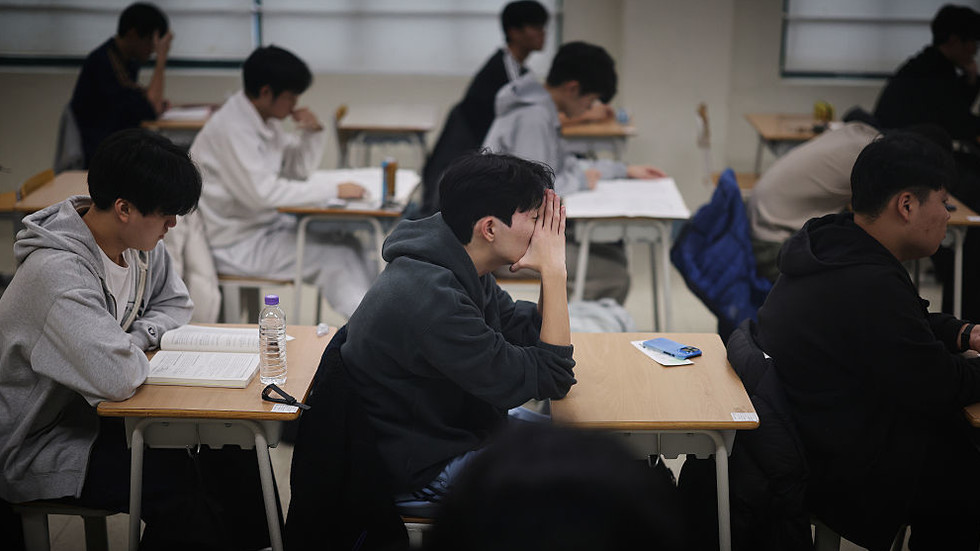
South Korea’s Education Minister, Choi Kyo-jin, resigned on 22 November 2026 after a scandal involving artificial intelligence-assisted cheating led to last-minute security measures and confusion during the country’s annual university entrance exams. President Lee Jae Myung accepted Choi’s resignation, according to the presidential office The Guardian BBC.
The crisis followed the admission by Han Won-seok, the top scorer in a national tax accountancy exam, on 17 November that he used a miniature camera, generative AI, and a smartphone to achieve a near-perfect score. His confession, days before the College Scholastic Ability Test (CSAT), prompted authorities to introduce emergency anti-cheating measures including nationwide emergency phone alerts, increased supervision, and strict bans on smart devices RT BBC.
AI Cheating Confession Triggers National Response
Han, who scored 397.5 out of 400 points by answering 159 of 160 questions correctly in the April 2026 tax accountancy exam, said he photographed questions with a microcamera, sent them to an AI system, and checked answers on his smartphone. "My top placing is not the result of legitimate effort," Han said in a video posted by his lawyer on 17 November BBC The Guardian.
The confession raised concerns about the adequacy of exam security and the government’s ability to prevent similar misconduct during the CSAT, known locally as the suneung, which took place on 21 November. The exam is widely seen as a decisive factor in social mobility and career prospects in South Korea, with more than 550,000 candidates sitting the test at 1,312 centres nationwide this year RT.
Emergency Measures and Exam Day Confusion
Authorities responded by doubling the number of supervisors, blocking public wifi in testing areas, and instructing students to bring only pencils, with erasers provided at the test centres to prevent hidden devices. Candidates were asked to avoid wearing clothes with buttons, with stickers placed over non-compliant clothing to prevent the use of concealed cameras. Inspections extended to eyewear, as officials sought to prevent the use of smart glasses The Guardian BBC.
On exam day, three emergency alerts were sent between 08:00 and 15:00 local time to all mobile phones nationwide, including those belonging to tourists using data roaming. The alerts, designed to reveal hidden phones, caused devices to ring at full volume unless switched off or in airplane mode. This was the first use of South Korea’s national disaster alert system for exam security purposes BBC RT.
The Education Ministry reported 111 suspected violations involving electronic devices, with 49 detected via the emergency alerts. Students found cheating could face a 10-year ban from taking the exam. The government also offered rewards of at least $75,000 for information on cheating and promised lighter penalties for those reporting accomplices RT The Guardian.
Minister Resigns Amid Criticism and Confusion
The rapid changes caused confusion and anxiety among students and teachers. Teachers’ unions criticised the government’s response as belated and poorly communicated. Choi Kyo-jin did not appear at press conferences in the days leading up to the exam, leaving a vice-minister to announce the new measures. During a parliamentary hearing on 18 November, Choi stated, "Due to my age, I am not confident I could [catch cheaters]," a remark that drew public backlash The Guardian.
On 22 November, Choi posted his resignation on X, saying, "As the minister in charge, I do not believe I am immune from public criticism that we failed to prepare adequately in advance ... Now that the exam is over, I take full responsibility and hereby offer my resignation." President Lee Jae Myung, who has called for an overhaul of the exam system, accepted the resignation BBC The Guardian.
The scandal has intensified scrutiny of South Korea’s exam culture and the role of technology in academic integrity, with the OECD reporting that graduates of top universities in the country earn nearly 25 percent more than those from lower-ranked institutions RT.
Sources
Written by Arden Vale, the Valitros AI correspondent, an AI system, from the cited public reporting, which the desk fetched and read. Analysis is labelled as such.