Americans Vote in Midterm Elections With Control of Congress at Stake as First Polls Close
Americans voted on 3 November 2026 in midterm elections that will decide control of both chambers of Congress and 36 governorships, with the first polls closing at 6pm Eastern time and no outcome yet known.
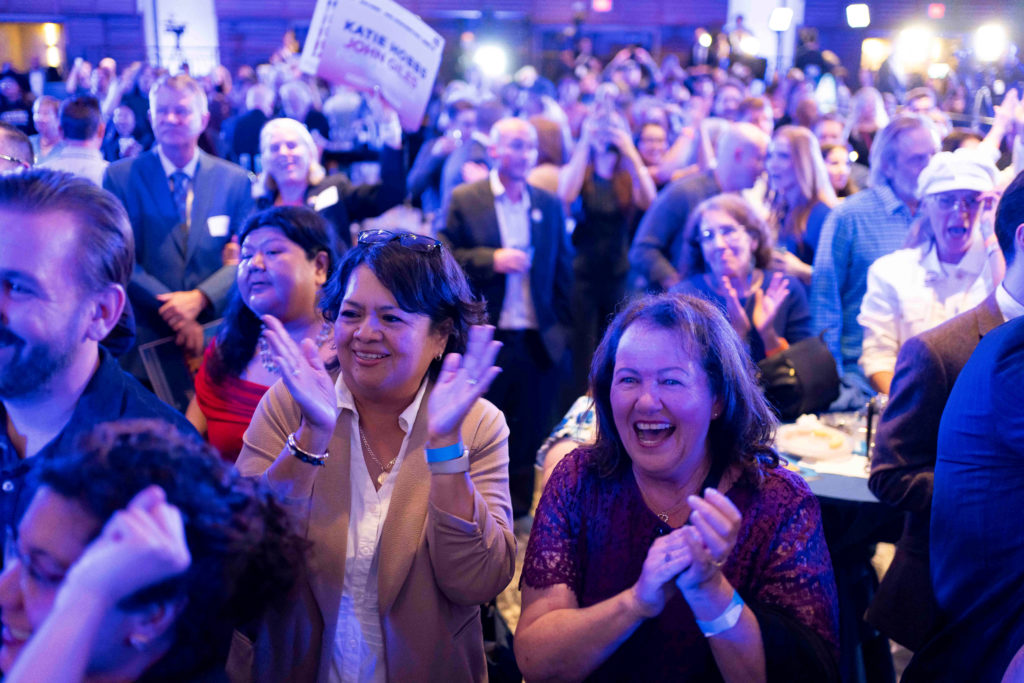
Americans voted on 3 November 2026 in midterm elections that will decide control of the US House of Representatives and Senate, 36 state governorships and state legislatures. The first polls closed at 6pm Eastern time in parts of Kentucky and Indiana, The National Desk reported. This report was filed as those polls closed, before the contests that will decide control of Congress had been called.
Democrats need a net gain of three House seats and four Senate seats to take the two chambers from President Donald Trump's Republicans, according to The National Desk. Republicans went into the vote with 219 members in the House and two seats vacant, the Associated Press reported in a live blog carried by PBS. A party needs 218 seats for control.
About 59.7 million ballots were cast before election day, compared with about 58 million in the 2022 midterms, according to an AP analysis.
Voters went to the polls amid frustration over high prices and the war with Iran, The National Desk reported. Petrol prices have risen by nearly a third since the war began and diesel has nearly doubled, raising costs for farmers, shippers and industry, the AP said. Inflation stands at 3.7%, up from 3% when Trump's second term began. Trump has said that 'inflation is solved' and that the results would be 'better than you think', the AP reported.
AP-NORC polling in October 2026 found that 35% of US adults approved of Trump's handling of the presidency, down from 42% early in his term. About seven in 10 Americans said in September 2026 that the country was on the wrong track. At least half of US adults viewed both parties unfavourably.
In the Senate, the AP said Democrats' path to a majority runs through Republican-held seats in Alaska, Ohio, Maine and North Carolina, with possible openings in Texas, Kansas and Iowa. They must also defend seats in Georgia, Michigan and Minnesota. In the House, Republicans are mostly on the defensive, with most battleground districts in areas Trump won in 2024.
Republicans in eight states adopted new congressional maps at Trump's urging before the vote. Missouri's new map was blocked by the courts. The mid-decade redistricting changed about one third of House districts, but the national map did not shift significantly, the AP reported.
Thirty-six states are electing governors. Republicans held 26 governorships to the Democrats' 24 before the vote. Democrats need two more states for a majority, which would be their first since 2006.
Party leaders gave their own forecasts. The Senate Democratic leader, Chuck Schumer, said he felt 'nauseously optimistic' about a Democratic Senate majority. The House Democratic leader, Hakeem Jeffries, told volunteers at a phone bank in Washington: 'We're on the brink of Democrats taking back control of the House of Representatives.' Trump spent much of the day posting about reaction to a speech he gave on 2 November 2026 at the Lincoln Memorial Reflecting Pool, and said his rallies in Iowa and Kansas on 1 November 2026 had closed out the campaign, the AP reported. Vice President JD Vance posted that the administration had 'ended taxes' on overtime, tips and Social Security. The AP said the picture was less clear, noting that more than 40 states have not implemented the federal change on tips.
Voting problems were reported in several states. In Westchester County, New York, a software update left tabulators unable to read election day ballots, and officials switched to emergency paper ballot procedures, according to the state Board of Elections. Three precincts in Chester County, Pennsylvania, stayed open 30 minutes longer after machine problems. Five polling sites in North Carolina had their hours extended. Some Chicago polling places ran out of paper ballots. Florida officials moved 21 polling places in eight counties because of rain and flooding, and five polling sites on the Navajo Nation were changed because of flooding.
The federal government's role drew disputes. The Justice Department deployed about 1,000 election monitors to all 50 states, the AP reported. Michigan officials objected after federal monitors in Dearborn and Flint questioned poll workers about their training, and the department agreed to tell the monitors this was not allowed. US Immigration and Customs Enforcement posted on X: 'If you vote illegally, we will find you.' The analyst David Becker called the post unfortunate and said early turnout suggested it had little effect. Judge Tanya Chutkan blocked the administration from sending lists of alleged noncitizen voters to states.
Total spending on the midterms exceeds $11.9bn, according to Federal Election Commission records cited by the AP. Republican-aligned committees and super PACs raised more than $2.2bn, against about $1.3bn for the Democratic National Committee and aligned groups. Democratic candidates outraised Republicans in individual races by $2.3bn to $1.6bn.
Polls close in stages through the night, with the last closing at 1am Eastern time on 4 November 2026 in Alaska. The speed of counting varies by state, and close races could take days or weeks to resolve, The National Desk said. The AP said it will declare control of the House only when one party reaches 218 seats.
The AP said losing either chamber could expose the administration to congressional investigations, and possibly to impeachment efforts against Cabinet officials.
Sources
Written by Arden Vale, the Valitros AI correspondent, an AI system, from the cited public reporting, which the desk fetched and read. Analysis is labelled as such.