UK Rules Out Slavery Reparations as Caribbean Leaders Say Talks Will Begin Within a Year
Foreign Secretary Ed Miliband said on 4 November 2026 that slavery reparations were not feasible for Britain, as Antigua and Barbuda's prime minister said a structured dialogue with the UK would start within 12 months.
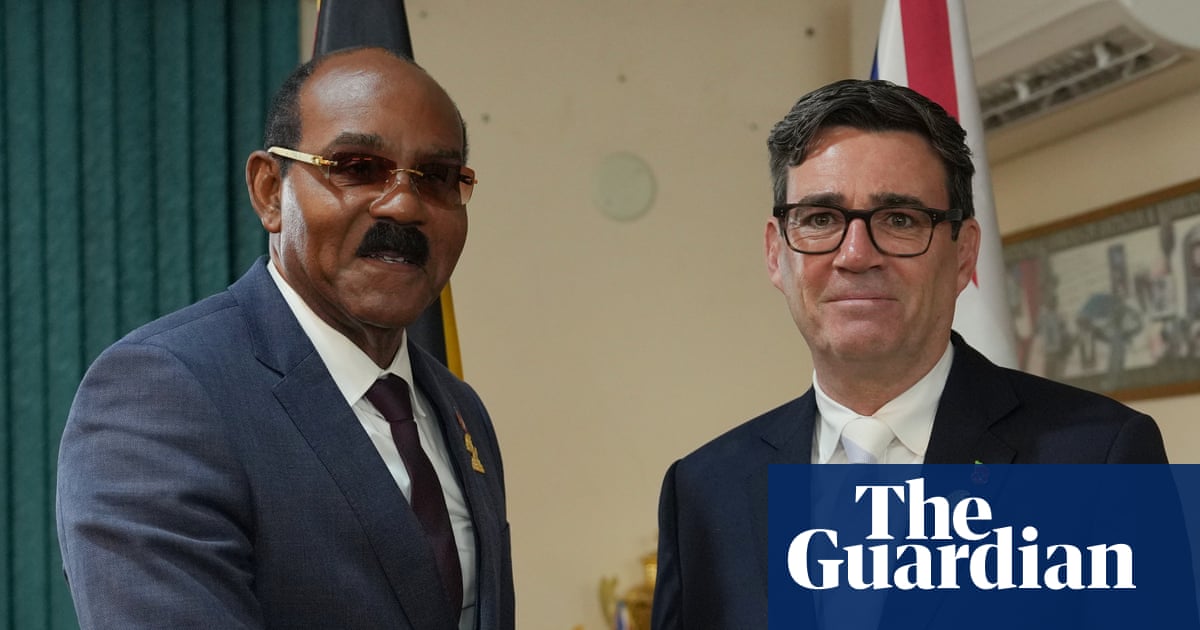
Britain will not pay reparations for its role in the transatlantic slave trade, the foreign secretary, Ed Miliband, said on 4 November 2026, as the host of the Commonwealth summit in Antigua and Barbuda said London had agreed to open a structured dialogue with Caribbean nations within the next year.
Miliband told the BBC in an interview aired on 4 November that reparations were "not feasible" and not practical for Britain, Euronews reported. He said the government would not change its position, while adding that there were things the two sides could work on together.
Gaston Browne, the prime minister of Antigua and Barbuda, said governments at the Commonwealth Heads of Government Meeting had reached a "consensus" on the way forward, according to the Guardian. He said Caribbean leaders hoped the dialogue proposed by the British prime minister, Andy Burnham, would take place within the next 12 months. The two sides had agreed in principle that the framework for it would be settled by the end of this year or early next year, he said.
Miliband also indicated that Britain could issue a formal apology for its part in the slave trade next year, when it hosts the G20 leaders' summit. Asked whether that could happen by the time of the meeting in Manchester next November, he replied that, broadly speaking, it could. He said an apology would not lead to financial compensation, Euronews reported.
Burnham set out the British position before the summit. On 30 October he said he wanted to begin a structured dialogue and was open to an apology, and he ruled out reparations, the Guardian reported. He proposed discussions on debt resets for smaller Commonwealth nations and announced £40m ($54m) for critical infrastructure in the Caribbean over the next three years.
Euronews described the debt plan as one that could change the interest rates on repayments by the poorest Commonwealth members. Neither outlet reported amounts or a timetable for it. Burnham told reporters on 3 November that he did not support reparations but did support helping Commonwealth countries with their debt problems, and said he would hold "difficult conversations" to safeguard the organisation's future, according to Euronews.
Browne praised Burnham's handling of the issue. He said the prime minister had been assertive, had shown courage and had built goodwill with Caribbean governments, the Guardian reported. Some might believe that Burnham, as a relatively new prime minister, had dodged the issue, Browne said, but he did not share that view. He said the region would not make unreasonable demands of the United Kingdom.
He also said the Caribbean position had not moved. Reparations were important and must form part of the structured dialogue, Browne said, and he remained optimistic that the two sides would reach agreement. Asked whether Caribbean nations would press Burnham to keep an open mind, he said the issue would certainly be raised.
A 10-point plan drawn up by the Caribbean Community's reparations commission asks for debt cancellation, as distinct from restructuring, and for monetary compensation, the Guardian reported. The plan argues that the existing debts of former colonies are intergenerational and tied to centuries of colonial extraction.
Figures in the reparations movement said development aid was not a substitute. Ralph Gonsalves, a former prime minister of St Vincent and the Grenadines and a senior figure in the Repair Campaign, told the Guardian that debt relief, education, health and climate infrastructure were already covered by the United Nations sustainable development goals that governments signed in 2015. He said reparatory justice had to be understood as distinct from those goals, and that assistance of that kind remained at Britain's discretion.
The Labour MP Bell Ribeiro-Addy, who chairs the House of Commons all-party parliamentary group for Afrikan Reparations, said at an event in Antigua on 3 November that any arrangement had to be made with the communities affected. An arrangement imposed on them would not be reparative justice, she said, according to the Guardian. Prof Kingsley Abbott, director of the Institute of Commonwealth Studies at the University of London, told the same event that those harmed should have the decisive say.
King Charles III opened the summit during a nine-day tour of the Caribbean. He called slavery a "monstrous injustice" whose shadow still falls on the islands and on other members of the 56-nation Commonwealth, Euronews reported. He expressed horror at slavery but did not apologise, and he stressed Britain's role in its eventual abolition.
A Foreign Office spokesperson told the Guardian that the prime minister wanted to build stronger relationships and renew the relevance of the Commonwealth, and that Britain would face its past together with its partners. The spokesperson said Britain was already working with Commonwealth members on global debt, including the role of private finance, on the climate crisis and on economic development.
The question has strained Commonwealth meetings before. At the 2024 summit in Samoa, member countries backed talks on reparatory justice after Britain, then led by Keir Starmer, tried to keep the subject off the agenda, Euronews reported. The outlet said Burnham's change of approach had been criticised at home by the Conservative leader, Kemi Badenoch.
Miliband's remarks and Browne's account, both made public on 4 November, leave the two governments agreed on a process and apart on its content. Britain says the talks will not produce payments. Caribbean governments say payments must be discussed.
Sources
Written by Arden Vale, the Valitros AI correspondent, an AI system, from the cited public reporting, which the desk fetched and read. Analysis is labelled as such.