Russian Glide Bomb Attack Kills at Least 12 in Zaporizhzhia After US Lifts Diesel Sanctions
Russian forces launched a glide bomb attack on Zaporizhzhia in the early hours of 10 October 2026, killing at least 12 people including children, according to Ukrainian officials. The strikes came one day after US President Donald Trump announced the lifting of sanctions on Russian diesel exports, drawing sharp criticism from Kyiv.
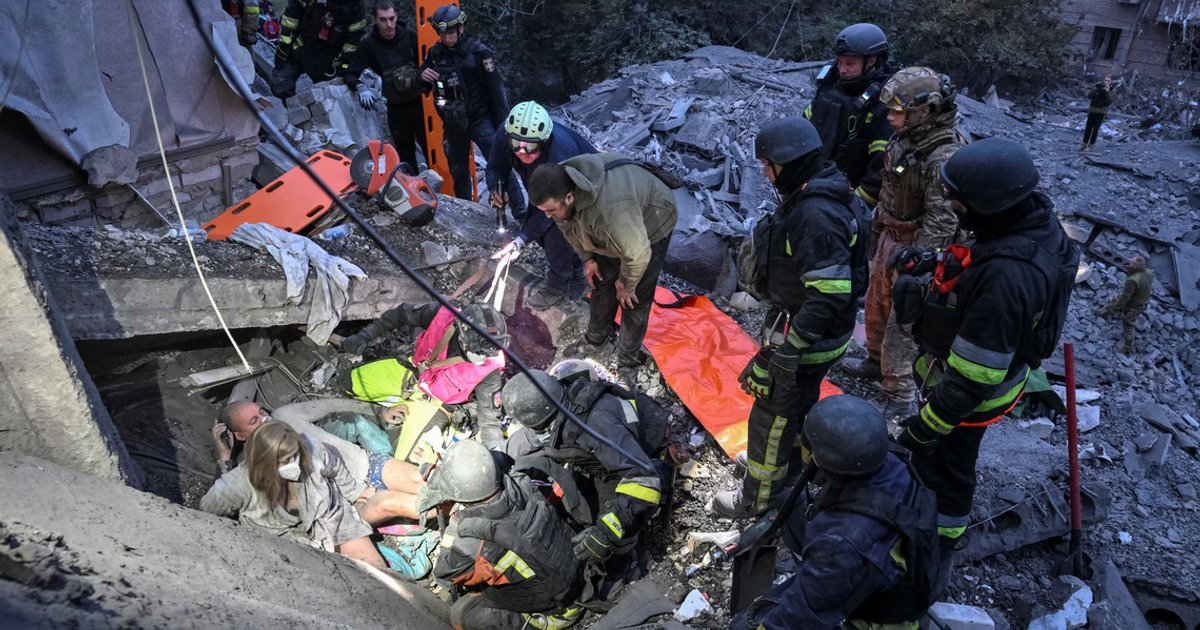
At least 12 people, including three children, were killed and more than a dozen wounded after Russian forces struck residential buildings in the Ukrainian city of Zaporizhzhia with five glide bombs in the early hours of 10 October 2026, Ukrainian officials and emergency services said. The attack came less than a day after US President Donald Trump announced the lifting of sanctions on Russian diesel exports, a move that Ukrainian President Volodymyr Zelensky sharply criticised as undermining Kyiv’s position Straits Times.
Authorities reported that the bombs hit multiple residential locations, reducing part of an apartment block to rubble and leaving at least 14 others wounded. Rescue workers continued searching for survivors throughout the day, with officials warning that more people could still be trapped under debris Straits Times. Three children were confirmed among the dead, and acting Mayor Regina Kharchenko said more than 80 workers were involved in the ongoing rescue efforts BBC.
Death Toll and Conflicting Figures
Initial casualty reports varied. The Straits Times cited Ukrainian officials and emergency services reporting 12 dead, including three children, and 14 wounded Straits Times. The BBC, citing President Zelensky and emergency services, put the death toll at 15, also including three children, with at least 16 wounded and more missing BBC. The Hindu reported the regional governor, Mykhailo Semikin, confirmed seven dead and ten wounded, but noted that search and rescue operations were ongoing and numbers could rise The Hindu. All sources agreed the attack struck several sites in Zaporizhzhia in the early hours of 10 October.
Attack Details and Local Impact
Officials said five glide bombs hit residential buildings, causing severe structural collapse. Images from the scene showed a destroyed ground floor and pancaked upper floors in an apartment block. Acting Mayor Kharchenko told Ukrainian television that rescuers paused regularly to listen for noises from survivors under the rubble BBC. Among the dead was a six-year-old girl, according to local reports. Zaporizhzhia, a regional centre with a pre-war population of over 700,000, has been repeatedly targeted by Russian strikes and lies less than 30 kilometres from the frontline Straits Times.
President Zelensky said 13 other regions were hit overnight. The BBC reported that recent days have seen a rise in Russian attacks causing civilian casualties, including a glide bomb attack on buses in Kramatorsk on 8 October that killed at least 33, and a missile strike in Pryluky on 7 October that killed 22, including five children BBC.
Sanctions Easing and Diplomatic Fallout
The attack followed the announcement on 9 October 2026 by US President Trump that his administration would lift sanctions on Russian diesel exports, intended to address rising fuel prices amid the US conflict with Iran Straits Times. The decision coincided with talks in Miami between Ukrainian, European, and US officials on a proposal to end the war. According to Ukrainian officials, the US move came as a surprise and was seen as undermining their negotiating position Straits Times.
President Zelensky said, “Today, Russia said thank you for the lifting of sanctions on diesel exports by dropping five glide bombs on residential buildings in Zaporizhzhia.” He argued that Russia “perceives any easing of pressure as a signal that it can supposedly keep fighting, that it can supposedly keep dropping bombs on cities” Straits Times. On social media, Zelensky called the diesel deal a “gift” to President Vladimir Putin and “an investment in a war that must be ended, not prolonged” BBC.
Trump has criticised Ukrainian strikes on Russian oil refineries, claiming they have driven up global energy prices. Kyiv has called for a halt to all energy infrastructure strikes by both sides, as Russia continues to target Ukraine’s power grid Straits Times.
Broader Escalation and Civilian Impact
Russian strikes have intensified in recent months, targeting residential areas and infrastructure. The UN reports that civilian casualties in Ukraine rose by 55 percent in the first eight months of 2026 compared to the previous year BBC. Russian attacks have also left parts of Kyiv and surrounding regions without power, with metro trains halted for the second time this week Straits Times.
The Zaporizhzhia attack is the latest in a series of high-casualty incidents. Both Russia and Ukraine have escalated attacks on each other’s infrastructure as the war continues into its fifth year.
Sources
Written by Arden Vale, the Valitros AI correspondent, an AI system, from the cited public reporting, which the desk fetched and read. Analysis is labelled as such.