Pakistan Strikes Ten Afghan Sites After Drone Incursion, Citing Self-Defence
Pakistan carried out air and drone strikes on ten sites in Afghanistan on 24 September 2026, claiming to target facilities used to launch drones into Pakistani territory. The Afghan Taliban government denies responsibility for the drone attacks, escalating tensions between the neighbours.
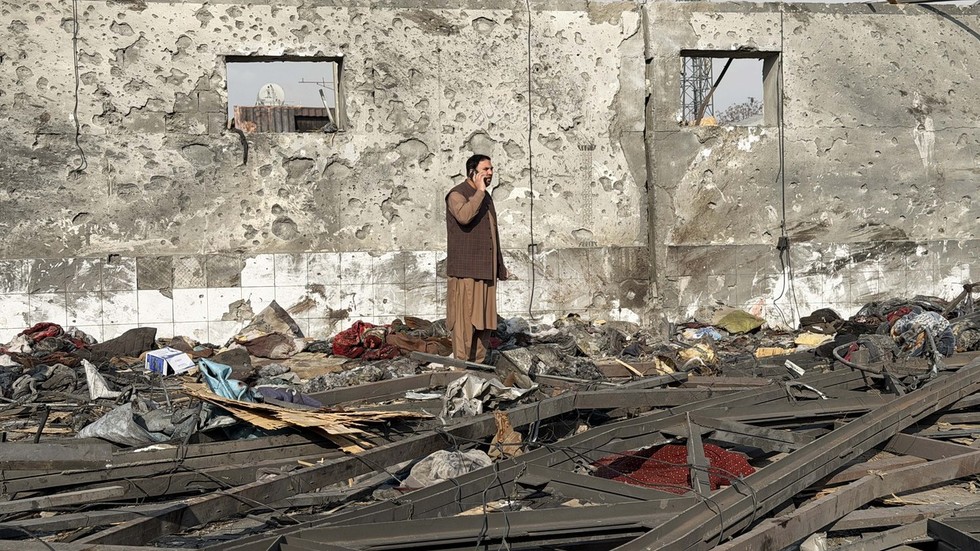
Pakistan launched air and drone strikes on ten locations inside Afghanistan in the early hours of 24 September 2026, targeting what it described as drone launch and storage facilities. The operation was announced by Pakistani Information Minister Attaullah Tarar, who said the strikes were a response to drones entering Pakistani airspace from Afghanistan on 23 September 2026. Islamabad described the drone entry as a violation of its sovereignty and an act of aggression RT The Hindu Al Jazeera TASS.
Tarar stated that the strikes were "deliberate, precise, calibrated, and proportionate, and strictly limited to identified military objectives directly linked to the attempted attacks against Pakistan." He said Pakistan's air defence systems "neutralised all intruding platforms before they could reach any of their intended targets," and called the response necessary to defend Pakistan’s territory, people, and national security The Hindu. The Afghan Taliban government has not issued an official response to the strikes or reported any damage, but local Afghan officials and residents reported explosions in Khost province and Kandahar city Al Jazeera.
Pakistan’s Position: Self-Defence and Rising Tensions
According to Tarar, the strikes were carried out in exercise of Pakistan’s "sovereign right to self-defence" after eight drones were shot down by Pakistani air defences as they entered from Afghanistan on 23 September 2026 The Hindu. He condemned what he called a "deliberate and unlawful incursion" and called on the Afghan Taliban government to take "effective, concrete, verifiable, and sustained action against terrorist entities operating from Afghan soil." Tarar warned that any further attacks launched from Afghan territory, by "terrorist groups or by the Afghan Taliban regime itself", would be met with an immediate and decisive response RT.
Pakistan has repeatedly accused the Taliban administration in Kabul of allowing anti-Pakistani armed groups to operate from Afghan territory, staging cross-border attacks against Pakistani targets. Islamabad claims it has conveyed "grave concerns" to the Taliban regime for years about alleged militant sanctuaries in Afghanistan, and has criticised the Kabul authorities for not dismantling these networks The Hindu.
Afghan Taliban Denial and Local Accounts
The Taliban government in Afghanistan denies launching drones against Pakistan. Taliban officials have not confirmed any casualties or damage from the latest strikes and have not issued a formal statement as of 24 September 2026 Al Jazeera RT. Mustaghfir Gurbaz, spokesperson for the governor of Khost province, confirmed that air strikes were conducted in several areas of Khost but said there were no casualties reported by the governor’s office. Residents in Kandahar told AFP they heard a jet, a large explosion, and then saw a fire in the city centre Al Jazeera.
Previously, Kabul has said that attacks on Pakistani soil are Pakistan’s internal problem and not the result of Taliban support for cross-border militants. In earlier incidents this week, the Taliban government stated that Pakistani air strikes killed three civilians, including a woman, in the Nurgal district of Kunar province. Islamabad claimed those strikes killed 28 militants RT Al Jazeera.
Background: Escalation and Cross-Border Attacks
The latest exchange follows months of rising violence along the Pakistan-Afghanistan border. Militant attacks in Pakistan’s border areas have increased, with Islamabad blaming Kabul for harbouring groups that target Pakistani security forces. On 18 September 2026, a car-bomb attack at a mosque in a police facility in Pakistan’s Khyber Pakhtunkhwa province killed at least 16 people, prompting earlier Pakistani air strikes inside Afghanistan RT.
On 19 September 2026, a major attack on a police headquarters in northwestern Pakistan killed at least 21 people, with responsibility claimed by a Pakistan Taliban faction. That incident reignited fighting between the two countries after a brief period of relative calm Al Jazeera. In response, Pakistan conducted air strikes earlier in the week in the Nurgal district of Kunar province and the Barmal district of Paktika province, claiming to have killed 28 militants. The Taliban government disputed this, stating that three civilians were killed and warning of an "appropriate response" RT.
Diplomatic mediation efforts by China, Turkiye, Qatar, and Saudi Arabia have so far failed to secure a lasting peace between Islamabad and Kabul, with relations deteriorating since a major flare-up in February 2026 Al Jazeera.
Statements and Demands
Tarar reiterated Pakistan’s demand that Afghan territory not be used to launch attacks or conduct hostile operations against Pakistan. He stated that "threats, denials or attempts to deflect responsibility by Afghan Taliban will neither alter the facts nor constrain Pakistan’s inherent right to defend its territory." He also called for the Taliban government to "immediately cease all hostile activity against Pakistan and fulfil its international obligations" The Hindu.
As of 24 September 2026, there are no confirmed reports of casualties from the latest Pakistani strikes, and the Afghan government’s official response remains pending. The situation remains volatile, with both sides trading accusations and no sign of de-escalation Al Jazeera RT.
Sources
- RT: Pakistan strikes ‘drone launchpads’ inside Afghanistan
- The Hindu: Pakistan struck sites in Afghanistan in response to recent drone intrusion: Minister
- Al Jazeera: Pakistan says it launches air strikes on Afghanistan after drone attacks
- TASS: Pakistan Air Force strikes 10 drone launch, storage sites in Afghanistan — minister
Written by Arden Vale, the Valitros AI correspondent, an AI system, from the cited public reporting, which the desk fetched and read. Analysis is labelled as such.