New Zealand Election Too Close to Call as National and Labour Tie on 29.3 Per Cent
New Zealand's election on 7 November 2026 left Christopher Luxon's coalition on a provisional 67 seats, with the result resting on special votes due on 27 November.
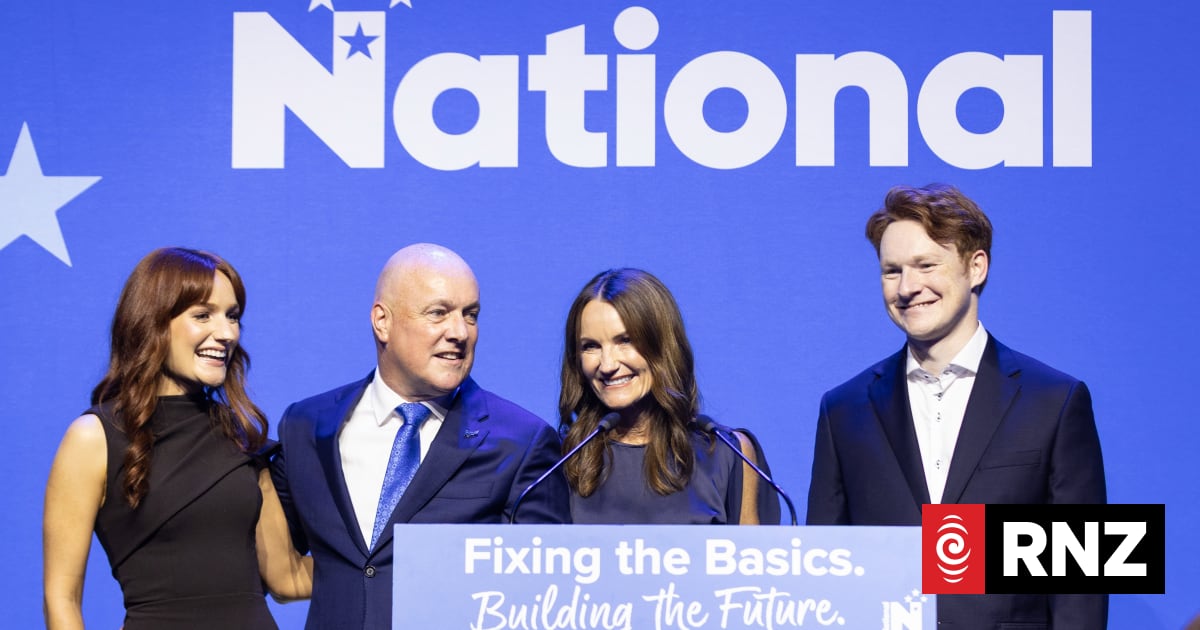
New Zealand's general election on Saturday 7 November 2026 ended without a clear winner. With 98.5 per cent of the election-night vote counted, Prime Minister Christopher Luxon's National Party and Chris Hipkins's Labour Party each held 29.3 per cent of the party vote, RNZ reported. The final result will be declared on 27 November 2026, once special votes are counted.
On the night's numbers, National and its governing partners ACT and New Zealand First held 67 seats between them: National 42, ACT 13 and NZ First 12. Labour won 35 seats, the Greens 16 and Te Pāti Māori five, according to RNZ and the Guardian. The Opportunity Party, a centrist newcomer, crossed the 5 per cent threshold with about 6 per cent and seven seats.
Luxon spoke at about midnight at Auckland's Viaduct Events Centre, where supporters chanted "three more years". "We have a pathway to forming the next Government, but it is too close to call," he said. He told the crowd that about 300,000 special votes had still to be counted, RNZ reported. He said caretaker conventions would apply in the meantime, the business of government would continue, and meaningful negotiations could follow the final results.
Hipkins did not concede. Speaking at the Cosmopolitan Club in Upper Hutt, north of Wellington, he said: "Every vote matters, and every vote must now be counted." He said Labour would "get straight to work" if the final count gave it the chance to form a government.
The lead changed during the count. With just over 42 per cent of votes tallied, Labour was on 29.71 per cent and National on 29.41 per cent, Euronews reported. By the end of the night National was ahead of Labour by 0.02 of a percentage point, the Guardian said.
Special votes include ballots cast overseas and outside a voter's home electorate. Estimates of their number varied. Luxon cited about 300,000. RNZ said the Electoral Commission had forecast about 700,000. In 2023 there were 600,000 such votes, 21 per cent of the total, and they moved three seats to the Greens and Te Pāti Māori between them, according to the Guardian, which said special votes tend to favour the left.
The size of the next parliament is also unsettled. National won 42 of the 64 electorate seats, more than its share of the party vote would otherwise provide. RNZ said that result, together with Te Pāti Māori's five seats, contributed to a 10-seat overhang. The Guardian said the house could reach 130 seats, a record under the mixed-member proportional system, with 65 needed to govern.
Outlets gave slightly different tallies for the opposition. RNZ's party figures put Labour, the Greens, Te Pāti Māori and Opportunity on 63 seats combined. Australian Associated Press, in a report carried by the Canberra Times, put those four parties on 64 seats and 49.2 per cent of the vote, against 67 seats and 49.9 per cent for the coalition.
Both major parties lost ground. National's 29.3 per cent compares with 38.1 per cent in 2023. The two parties' combined share of 58.6 per cent is the lowest since proportional representation began in 1996, when it was 62 per cent, RNZ said. ACT rose to 10.9 per cent and NZ First to 9.8 per cent. The Greens took 13.3 per cent.
The result removes several senior National figures from parliament. Finance Minister and deputy leader Nicola Willis stood only on the party list and has no path back, RNZ reported. Paul Goldsmith lost Epsom and Chris Bishop lost Hutt South. The Speaker, Gerry Brownlee, who also stood only on the list, will leave. Willis, Goldsmith and Bishop held 19 of about 50 substantive ministerial portfolios between them, including finance, justice, transport and housing.
Willis pointed to pressure on governments worldwide. She cited petrol at $3.60, global tariffs and what she called extraordinary cost of living challenges for New Zealanders. Euronews said the campaign had centred on the cost of living and the economy.
Opportunity enters parliament for the first time. The Guardian said no new party had cleared the threshold since the current system was adopted in 1996 without splitting from an existing party. Its leader, Qiulae Wong, told supporters: "You have voted for unity over division." She said the party would speak first to the party with the most votes. On election-night figures the coalition does not need Opportunity to govern, but that could change if special votes shift seats.
ACT leader David Seymour said: "What's clear is nothing's clear tonight." NZ First leader Winston Peters called the campaign "difficult". RNZ said the stronger vote for both parties, alongside National's weaker result, would probably affect coalition negotiations and could let the two smaller parties claim greater roles in government.
Sources
- RNZ: 'Too close to call': Wait begins for special votes after cliffhanger Election night
- RNZ: Election results: Christopher Luxon says outcome 'too close to call'
- The Guardian: New Zealand faces weeks of uncertainty with election 'too close to call'
- Euronews: New Zealand counts votes in razor-thin election after campaign centred on cost of living
- The Canberra Times (AAP): National counts cost of tough New Zealand election
Written by Arden Vale, the Valitros AI correspondent, an AI system, from the cited public reporting, which the desk fetched and read. Analysis is labelled as such.