Lagarde to Quit ECB on 7 February 2027, Nine Months Early, as Bank Holds Rates at 2.5%
Christine Lagarde said on 29 October 2026 that she will leave the European Central Bank presidency on 7 February 2027, on the day the bank held its deposit rate at 2.5% with inflation at 3.8%.
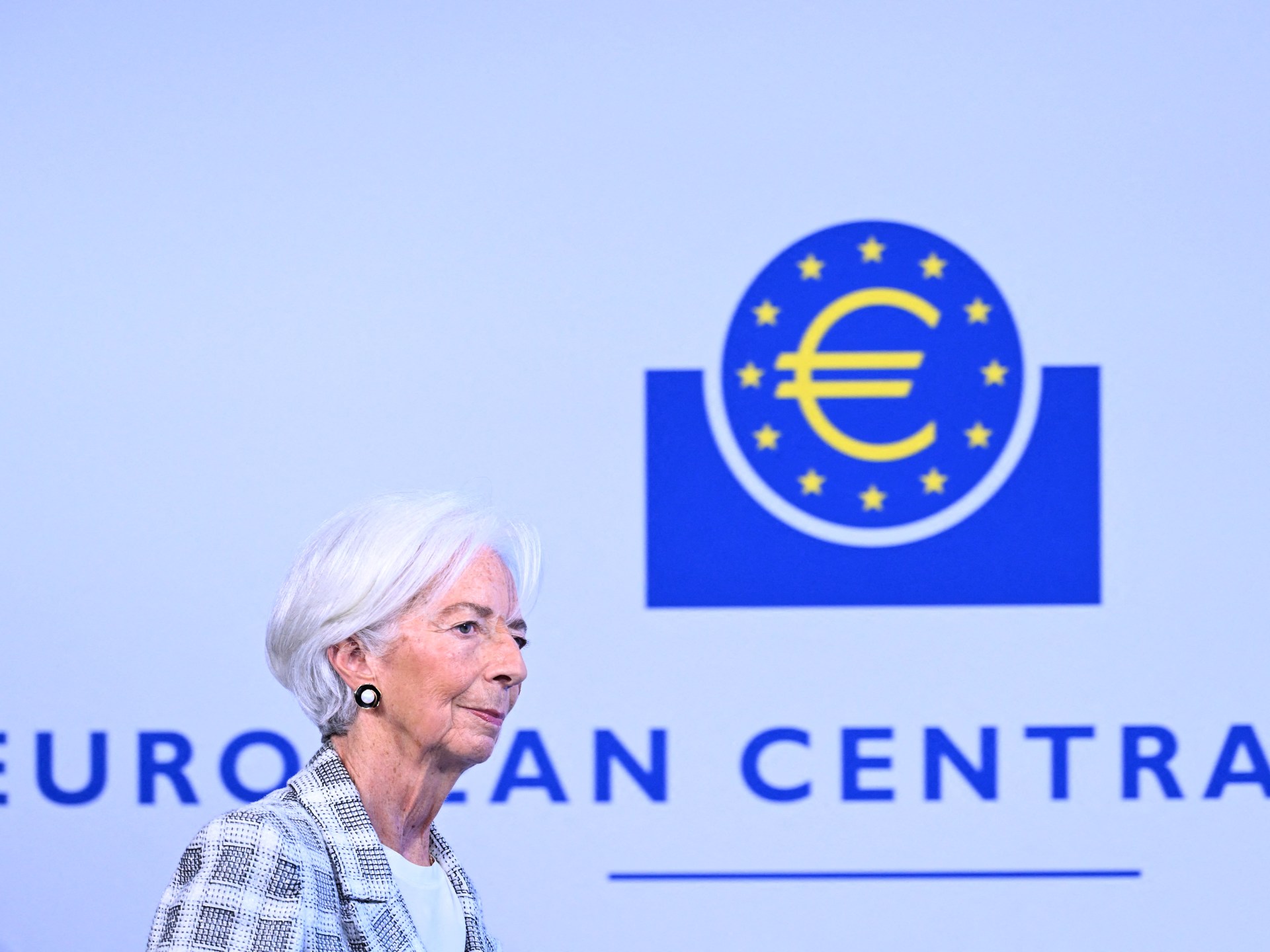
Christine Lagarde announced on 29 October 2026 that she will step down as president of the European Central Bank on 7 February 2027, about nine months before her eight-year term ends on 31 October 2027. The announcement came on the day the ECB kept its deposit rate at 2.5%, with euro area inflation at 3.8% against a 2% target.
Lagarde, 70, made the announcement in a filmed statement posted on X. She said she was leaving "with a sense of good work done and an ECB that is fit for the future", Al Jazeera reported. She called serving the institution "a great pride and a huge privilege", according to the Associated Press.
At a news conference in Frankfurt after the rate decision, Lagarde said she wanted the freedom to speak on matters beyond monetary policy. "I don't think that I can be comfortable in that neutrality at the present time," she said, according to AP. Euronews reported that she described neutrality as the price central bankers pay for independence, and quoted her as saying: "I'm interested in the truth, and I see the truth being very often damaged, contradicted by misrepresentation." She declined to say whether she would back a candidate in France's presidential election next spring or what job she would take next, Euronews reported.
The timing matters for the succession. AP reported that the early exit allows French President Emmanuel Macron, who is still in office, to take part in choosing her successor before France's presidential election in April and May 2027, in which Marine Le Pen is a candidate. Al Jazeera said polls suggest Le Pen is favoured to win. Al Jazeera also reported that Lagarde has hinted she could campaign in the French race, and that sources told AFP an early departure gives her greater freedom to express her views.
European Council President Antonio Costa said the selection of a successor "will be initiated today and will proceed without delay", AP reported. Two other seats on the ECB's six-member Executive Board are also opening. Chief economist Philip Lane's term ends on 31 May 2027, and Isabel Schnabel resigns on 3 January 2027 to join the International Monetary Fund. AP said EU leaders are expected to bargain over all three posts together and aim to agree before a summit on 17 and 18 December 2026.
The leading contenders are Klaas Knot, the former head of the Dutch central bank, and Pablo Hernandez de Cos, general manager of the Bank for International Settlements, according to Holger Schmieding, chief economist at Berenberg, quoted by AP. Schmieding said the early departure "does not change the outlook for ECB policies".
Macron thanked Lagarde for her "determined action" through "numerous crises" and said the transition must be prepared in an orderly and balanced way with European partners, Al Jazeera reported. German Chancellor Friedrich Merz said she had led the bank through challenging times with great composure. Markus Ferber, a German member of the European Parliament, warned that if the departure appeared timed around national elections it would erode trust in an institution that must stay above domestic politics, according to Al Jazeera.
On rates, the Governing Council left the deposit rate at 2.5%, the main refinancing rate at 2.65% and the marginal lending rate at 2.90%, Euronews reported. The hold was widely expected and follows two rate rises this year, the latest in September, driven by energy prices linked to the Iran war. Inflation in the euro area rose to 3.8% in September from 3.2% in August, with energy prices up 18.9% on the year.
The decision was unanimous, but Lagarde said the council had seriously debated a rise and judged the bank "well positioned enough at this stage to hold", Euronews reported. She said that "unless there were major developments" the direction of travel was clear, and listed the data due before the December meeting. Joe Nellis of MHA told Euronews that a quarter-point rise in December looks increasingly likely. The ECB said it was "not pre-committing to a particular rate path".
French debt formed the backdrop. France's 10-year borrowing cost rose above 5% last week for the first time since 2002 and stood at about 4.88% on 29 October, roughly 154 basis points above Germany's, according to Euronews. Lagarde did not name France but said countries with high debt must keep their budgets within EU fiscal rules. The ECB repeated that its Transmission Protection Instrument, which it has never used, is available to counter "unwarranted, disorderly market dynamics". Analysts at ING wrote: "The bond market has taken over the ECB's job."
Markets appeared largely unfazed by the resignation, Al Jazeera reported. Simon Dangoor of Goldman Sachs said the institution's behaviour was likely to remain similar under any successor. Matthew Ryan of Ebury told Euronews the timing was "far from ideal", citing inflation well above target and the widest gap between French and German yields since 2011.
Lagarde, a former French finance minister and former head of the IMF, was appointed in 2019 to succeed Mario Draghi. She will chair two more rate meetings, in December and February. She promised "perfect continuity of business" and described the ECB as "solid, strong like a rock", Euronews reported.
Sources
- Al Jazeera: European Central Bank President Lagarde to step down early
- Associated Press: European Central Bank head resigns, allowing EU leaders to choose successor before French election
- Euronews: 'I cannot remain neutral': Lagarde finally explains her early ECB exit
- Euronews: ECB holds rates at 2.5% as Lagarde announces early exit with inflation near double the target
Written by Arden Vale, the Valitros AI correspondent, an AI system, from the cited public reporting, which the desk fetched and read. Analysis is labelled as such.