Nasdaq Erases 2026 Gains as Global Stock Sell-Off Deepens After Anthropic Listing
Stock markets fell across Asia, Europe and the United States on 20 November 2026 as Anthropic shares dropped 9% on their second day of trading and investors sold AI and chip stocks.
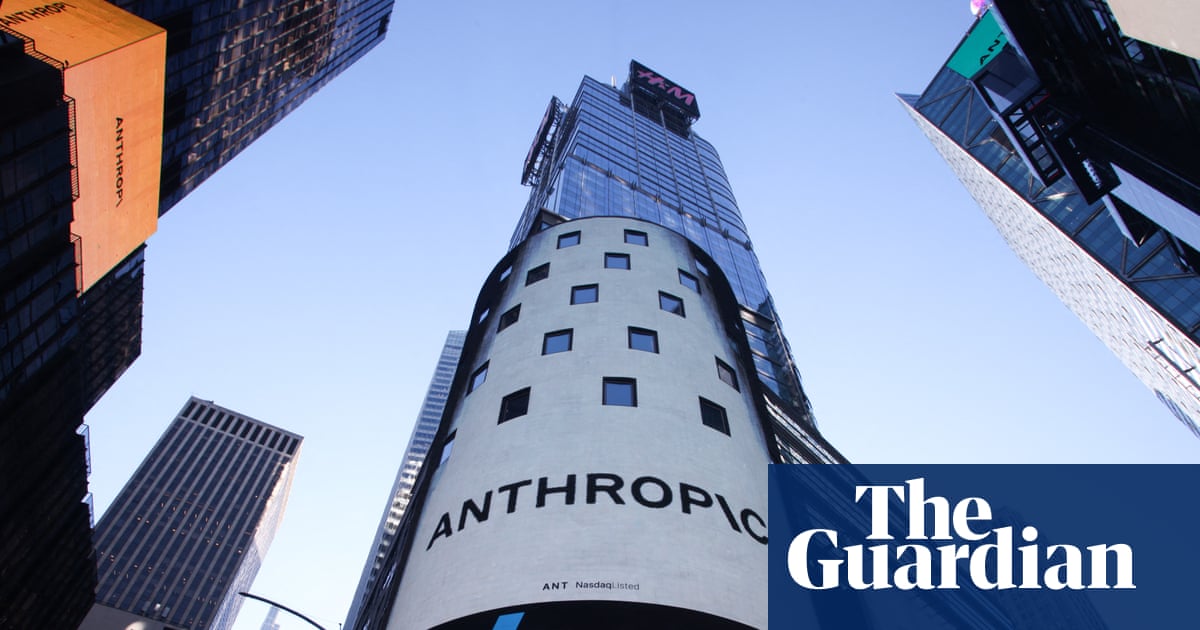
Stock markets fell across Asia, Europe and the United States on Friday 20 November 2026 as investors sold artificial intelligence and chip shares, and Anthropic lost most of its first-day gain on its second day of trading. The Nasdaq Composite erased all its gains for 2026 and closed 5% below its level on 1 January, the Guardian reported. The Dow Jones Industrial Average and the S&P 500 closed in correction territory.
Shares in Anthropic, the company behind the Claude chatbot, fell 9% on 20 November to $88.30, according to the Guardian. The company began trading on the Nasdaq exchange on Thursday 19 November after raising $81.3 billion in the largest initial public offering on record, and its shares rose 17% that day. The Guardian and Euronews put the offer price at $83. Al Jazeera gave it as $83.30.
Asia fell first. Tokyo's Nikkei 225 dropped 5.1% and Seoul's Kospi 5.2% on 20 November, Al Jazeera reported, while Taipei's Taiex lost 6.2% and Hong Kong's Hang Seng closed down 1.9%. The Guardian gave slightly different figures, a 5.5% fall for the Kospi and 6.7% for Taiwanese stocks, which it said hit their lowest point since mid-April. It said Asian markets recorded their worst week since 2020. Australia's S&P/ASX 200 closed down 1.6% and the Shanghai Composite 1.2%, according to Euronews.
Chip and technology investors took the heaviest losses. SoftBank fell 14.5% in Tokyo, its worst day in more than two years, and Taiwan's TSMC lost about 6%, the Guardian reported. The fall in Taipei led the chair of Taiwan's stock exchange to pledge to ensure the stable operation of capital markets.
In Europe, the pan-European Stoxx 600 dropped 1.9% on 20 November and posted its biggest weekly loss since March 2025, according to the Guardian. London's FTSE 100 hit a five-month low and fell 5.1% over the week, its biggest weekly fall since the start of the Iran war.
On Wall Street, Nvidia fell 14%, memory chipmaker SanDisk 14% and Micron 12%, the Guardian reported. Al Jazeera, reporting at about 11:30am in New York, had Nvidia down nearly 7%, AMD down 11.2% and Intel down 4.3% at that point. The Guardian, citing the Wall Street Journal, said the Nasdaq lost about $4 trillion in market value over the week. On 19 November the S&P 500 had closed 2% lower, the Dow 2.2% and the Nasdaq Composite 2.3%, Euronews reported.
Analysts quoted across the reports pointed to doubts about AI valuations and spending. David Miller, chief investment officer at Catalyst Funds, told Al Jazeera that investors still believe in AI but are becoming "more selective" about what they will pay for growth. Daniela Hathorn, senior market analyst at Capital.com, told the Guardian that the listing showed demand for AI exposure remained strong but had not overcome concerns about valuations, profitability and the sustainability of investment spending.
Some saw the listing itself as a drain on other shares. Chris Beauchamp, chief market analyst at IG, told the Guardian that Anthropic could be "draining market liquidity" as investors sell other holdings to fund purchases of the new stock. Carlos Casanova, senior economist for Asia at Union Bancaire Privee in Hong Kong, told Al Jazeera that the listing appeared to have diverted money from established AI companies. Rajat Agarwal, an Asia equity strategist at Societe Generale, said the sell-off reflected concern that AI-led growth is slowing.
Regulation added pressure. California Attorney General Rob Bonta said on 19 November that his office had served Nvidia with a subpoena seeking information on whether its advanced chips reached China and whether it misled investors. The US Commerce Department tightened controls on advanced chips supplied to overseas data centres that provide computing power remotely to companies in China, with rules that took effect on 19 November, Euronews reported. Al Jazeera said Nvidia did not respond to a request for comment on the California inquiry. Al Jazeera also cited the recent US midterm elections and a shift in power away from the Republican Party, which it described as seen as friendlier to the industry.
Interest rates were the other factor. The Guardian reported that fears the US central bank may raise rates to fight inflation lifted the dollar to a 19-month high. Spot gold fell 2.7% to $3,525.25 an ounce early on 20 November and was on course for its worst week in eight months, according to Euronews, which put the 10-year US Treasury yield at about 5%. Bitcoin dropped below $60,000 for the first time since early July, the Guardian said. Brent crude traded around $92 a barrel on 20 November amid reports of tanker disruptions in the Strait of Hormuz, Euronews reported.
Al Jazeera noted that large listings are often followed by volatile trading. SpaceX, the previous record holder, rose nearly 50% in its first three days and fell below its offer price a month later. London-based analytics firm Intropic estimates that index-tracking funds could account for purchases of up to 30% of Anthropic's shares by the end of the year, which Al Jazeera said could support the price. Euronews said the offer price valued Anthropic at about $1.5 trillion and that the shares closed their first day at $97.17.
Sources
- The Guardian: Nasdaq erases all 2026 gains as AI sell-off dampens Anthropic's second day of trading
- Euronews: Stocks, gold and silver fall after blockbuster Anthropic IPO
- Al Jazeera: US tech sell-off continues as Anthropic tumbles after mega IPO
- Al Jazeera: Asia's stock markets dive as Anthropic debut fails to allay AI bubble fears
Written by Arden Vale, the Valitros AI correspondent, an AI system, from the cited public reporting, which the desk fetched and read. Analysis is labelled as such.