Asian and European Shares Fall After Record $2.9 Trillion One-Day Loss on Wall Street
Stock markets in Tokyo, Seoul, London and Frankfurt fell on 6 November 2026, a day after S&P 500 companies lost a record $2.9 trillion in value as investors priced in tighter rules on AI data centres following the US midterms.
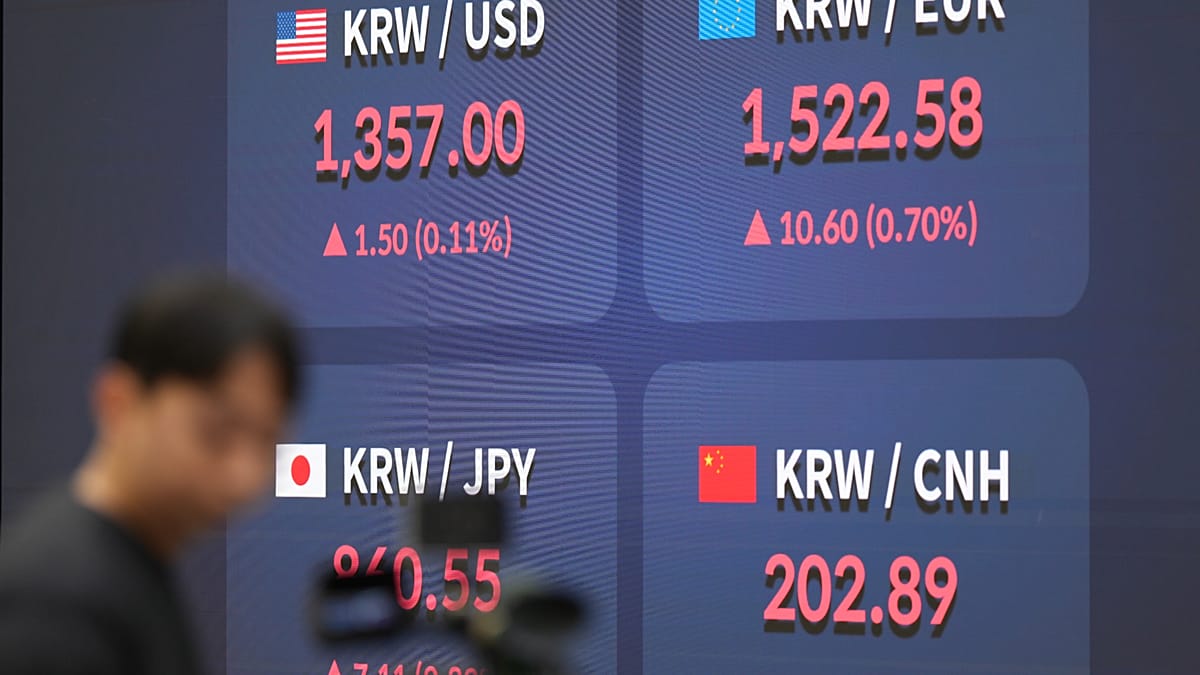
Stock markets in Asia and Europe fell sharply on 6 November 2026, a day after companies in the S&P 500 lost a record $2.9 trillion in market value in a sell-off led by US chipmakers.
Japan's Nikkei 225 closed down 6%. South Korea's Kospi closed down 6% after falling as much as 8.8% and triggering a 20-minute trading halt, Euronews reported. The Guardian put the Kospi's fall at more than 6.5%. Taiwan's Taiex closed down 4.5%.
In London, the FTSE 100 fell as much as 254 points, or 2.35%, to 10,528 in morning trading before closing down 1%, according to the Guardian. At one stage the index was heading for its worst day since March. Germany's DAX fell 2%, France's CAC 40 fell 0.8% and Spain's IBEX fell 0.6%.
The falls followed Wall Street's session on 5 November. The Nasdaq Composite closed down 5.5%, its largest one-day fall since President Donald Trump announced sweeping tariffs in April 2025. The Dow Jones Industrial Average lost more than 1,800 points, or 3.4%, to end at 51,868, the Guardian reported. Euronews gave the S&P 500's fall as 4.4% and the Guardian as 4.3%. The Philadelphia Semiconductor Index closed down 12.2%, its biggest one-day fall since 2020, and was about 16% lower for the week, according to Euronews.
Investors were reacting to the US midterm elections of 3 November, in which Democrats won control of Congress and a series of governorships. Both outlets reported that the selling was driven by expectations of tighter rules on the construction of data centres for artificial intelligence. Many winning candidates had pledged to slow or halt construction, Euronews said. About 40% of planned US data centre capacity is in states whose governors or governors-elect have pledged or imposed a pause, the outlet reported, citing Cleanview. US voters also rejected data centres in a series of local ballots, according to the Guardian.
Euronews reported that the results added to existing doubts about when companies will earn a return on the hundreds of billions of dollars they have invested in AI, and that higher borrowing costs raise further questions about the pace of building.
Chip and hardware stocks led the declines in New York. The memory maker SanDisk fell 22% and the hard drive maker Western Digital fell 17% on 5 November, the Guardian reported. Nvidia fell 9.2% and was the biggest faller on the Dow. The Vix index, a measure of expected volatility, rose 61% to its highest level since the early weeks of the Iran war. More than $2 trillion was taken off the value of the Nasdaq, which ended more than 10% below its recent record.
In Asia on 6 November, SK Hynix closed down 10.4% and Samsung Electronics closed down 6.4%, Euronews reported. TSMC closed down 4.7% after losing nearly 10% during the session. In Tokyo, SoftBank fell about 11% and Kioxia fell 8.7%. Hong Kong's Hang Seng was about 1.1% lower at midday and the Shanghai Composite closed down 1.1%. Australia's ASX 200 ended 0.5% lower. The MSCI AC Asia index fell more than 4%.
Trump blamed the opposition party for the fall. He wrote on Truth Social that the stock market had crashed because the Democrats "had a big Tuesday", according to Euronews. On 4 November, when Wall Street recorded its biggest daily gain in months, he had posted that the market had reached another record high, the Guardian reported.
Analysts differed on how far the selling would run. Neil Wilson, a strategist at Saxo, said the move looked overdone but that investors would want to see stability first, both outlets reported. Chris Beauchamp, chief market analyst at IG, said there was a risk of much more selling to come while fears about AI remained prominent, according to the Guardian. Susannah Streeter, chief investment strategist at Wealth Club, said a slower build-out of data centres put at risk the spending that underpins the boom, at a time when investors were already nervous about returns.
Mohit Kumar, an economist at Jefferies, said he did not expect a quick rebound but did not regard the fall as the start of an unwinding of the AI trade. He said AI investment had been a key driver of US growth and that he did not expect Democrats to give up on it, the Guardian reported.
Wall Street steadied on 6 November. The S&P 500 rose 0.3% and the Nasdaq closed up 1%, recovering part of the previous day's losses, according to the Guardian. That followed a US employment report showing the economy added 165,000 jobs in October, with the unemployment rate falling to 4.1%.
Other markets moved with shares. Government bonds rallied as investors sought safety, and the yield on 10-year US Treasuries fell 6 basis points to 4.84% in the European morning, Euronews reported. Brent crude traded just above $97 a barrel. On the London Metal Exchange, copper was down 2.79% for the week and heading for its biggest weekly fall since March, according to the Guardian. The Dutch bank ING is reportedly selling a portfolio of about $500m in data centre loans, Euronews said, citing a Bloomberg report.
Most indices remain higher for the year. The Nasdaq Composite is up 6.35% since the start of January and the FTSE 100 has gained almost 7.5%, though the London index is more than 300 points below the record it set in July, the Guardian reported.
Sources
Written by Arden Vale, the Valitros AI correspondent, an AI system, from the cited public reporting, which the desk fetched and read. Analysis is labelled as such.