France Counts 320,000 Protesters on Third Weekend as Turnout Falls and 70,000 Police Deploy
About 320,000 people marched across France on 31 October 2026, the third straight weekend of protests over living costs and schools, a day after Fitch cut the outlook on French debt to negative.
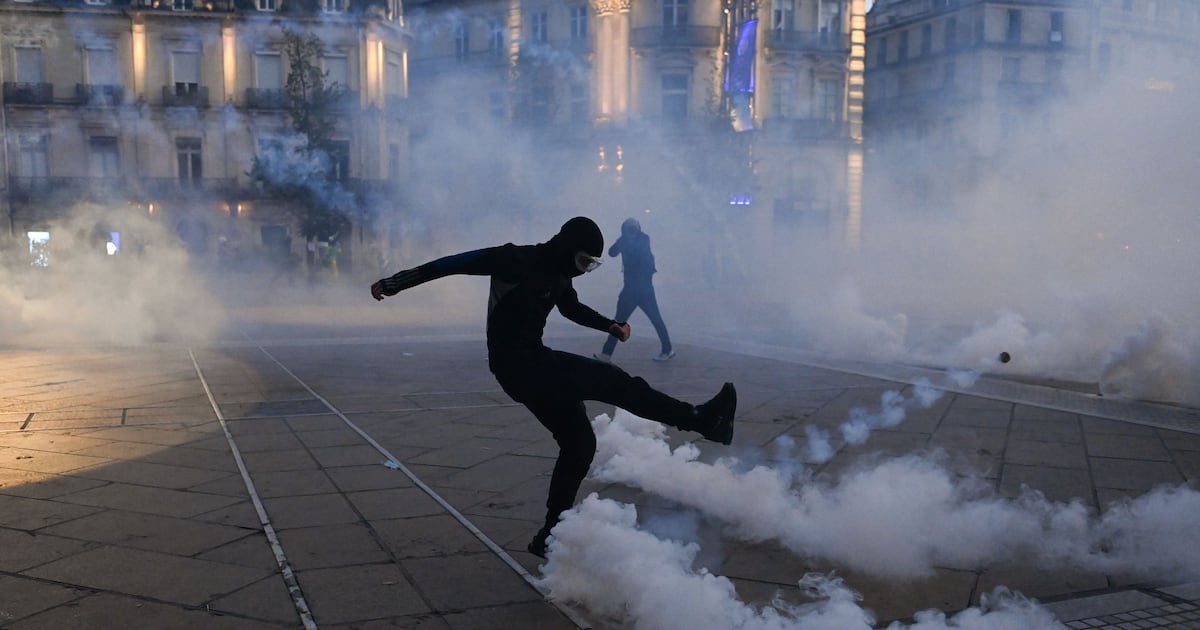
About 320,000 people marched across France on Saturday 31 October 2026, including 70,000 in Paris, in a third consecutive weekend of protests over the cost of living, fuel prices and conditions in schools, according to Interior Ministry figures. Turnout was lower than on the two previous Saturdays, and about 70,000 police officers were deployed nationwide.
The ministry counted 550,000 marchers on 17 October 2026 and 410,000 on 24 October 2026, Euronews reported. Organisers claimed 800,000 on each of those two days. The marches on 17 October were followed by rioting and looting, which appeared to take the government by surprise.
Saturday's authorised marches were largely peaceful, but scuffles and isolated clashes broke out in Paris, Lyon, Toulouse and Marseille as they dispersed, The National reported. Riot police charged small groups at the end of the Paris march and used tear gas in Lyon and Toulouse. In Lyon the gas was used when the march reached Place Jean-MacÉ, according to Euronews.
The Interior Ministry first described the day as "generally calm". By 2pm it had recorded 27 arrests, compared with 217 at the same time a week earlier, Euronews reported. The ministry said "radical elements" tried to break away from marches in Bordeaux, Toulouse, Lyon and Marseille to cause damage and loot, and that security forces stopped them. Checks at railway stations and on roads found people carrying objects that could be used as weapons, The National reported.
The government had tightened the rules before the weekend. Interior Minister Laurent Nuñez said on 29 October 2026 that protests in city centres were banned and that only those "on the outskirts of cities" would be allowed, Euronews reported. Gatherings presented as Halloween celebrations were also banned. A source close to the ministry warned of a "very high risk of public disorder". Police were recalled from leave and rest days were cancelled.
In Paris the march was moved to the eastern edge of the city, from Porte de Bagnolet to Porte de Charenton. The Council of State, France's senior administrative court, rejected a union challenge and upheld the ban on a march between the Nation and Bastille squares. More than 40 metro stations were closed. Police barred access to Place de la RÉpublique and Les Halles from 11pm to 6am, and unaccompanied minors faced a 9pm curfew around the Champs-ÉlysÉes on Saturday and Sunday. On 28 October 2026 a Paris court had suspended an earlier curfew for minors as a "serious and illegal infringement of freedom of movement", Euronews reported.
Unions said in a joint statement on 28 October that they would explore "all possible avenues of appeal against this general and disproportionate ban". Jean-Luc MÉlenchon of France Unbowed joined marchers at Porte de Bagnolet and wrote on X that the government was "drifting towards authoritarianism". Human rights groups accuse French police of using excessive force against protesters, Euronews reported. The Interior Ministry said: "The security forces will show the greatest firmness towards those responsible for violence and damage."
Students, trade unions and a smaller group of yellow vest protesters took part. They cited the cost of living, high fuel prices, rising inflation and strained public services, The National reported. Students also protested against overcrowded classrooms, deteriorating school buildings, teacher shortages and a university admissions system they regard as unfair.
The outlets date the movement's start differently. Euronews said it began in mid-September, when pupils protested over school conditions in the suburbs of Paris. The National said protests began in late September, when the government opened talks on its 2027 budget. The government presented measures on student grievances on 26 October 2026, which unions called insufficient.
Protester Jerome Rodriguez said during the Paris march that demonstrators were there "to keep shouting our demands louder and louder", according to The National. He said he doubted the government would respond.
The protests coincide with pressure on French public finances. Fitch kept France's credit rating at A+ on 30 October 2026 but cut the outlook from stable to negative, Euronews reported. The agency cited weaker growth, higher borrowing costs and a larger deficit than at its previous review in August. It said "the persistence of political fragmentation" and "a difficult social climate", including mass protests, "further complicate the implementation of a lasting fiscal consolidation".
The statistics office Insee reported that French output fell 0.1% in the third quarter, after stagnating in the second and shrinking 0.2% in the first. Public debt is near 120% of economic output, according to The National. Finance Minister Roland Lescure said he "takes note" of the Fitch decision and that it confirmed "the absolute need to adopt by the end of the year a responsible budget" that cuts the deficit to 5%. The National Assembly has no majority, and the government has not ruled out passing the budget without a vote under Article 49.3 of the constitution.
The Chamber of Commerce estimates retail losses from the unrest at more than 1 billion euros, and other estimates that include uninsured damage and lost revenue put the total at about double that, The National reported. Shops belonging to Hermès, Louis Vuitton and Burberry were among those attacked during earlier unrest. The US embassy advised Americans to avoid areas with planned demonstrations.
France holds a presidential election in April 2027. The National reported that the unrest has boosted Marine Le Pen, who leads the polls.
Sources
- Euronews: France's third weekend of social protests sees lower turnout and early clashes in major cities
- The National: Isolated clashes in France after nationwide protests on Halloween
- Euronews: Curfews, 70,000 police and Halloween fears: France braces for fresh protests
- Euronews: France aims for 'responsible' 2027 budget as Fitch downgrades outlook
Written by Arden Vale, the Valitros AI correspondent, an AI system, from the cited public reporting, which the desk fetched and read. Analysis is labelled as such.