Yotova Set to Become Bulgaria's First Elected Female President as Gyurov Concedes Runoff
Acting President Iliana Yotova was the apparent winner of Bulgaria's presidential runoff on 1 November 2026, with initial counts giving her about 58% and her rival Andrey Gyurov conceding.
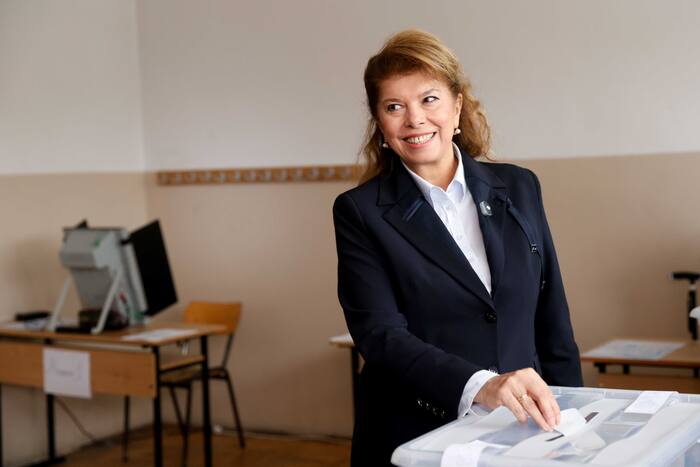
Bulgaria's acting president, Iliana Yotova, was the apparent winner of the country's presidential runoff on 1 November 2026, according to initial vote counts reported by the Associated Press. Her opponent, the former interim prime minister Andrey Gyurov, conceded the same evening.
Counts by several polling agencies gave Yotova 58% of the vote, with Gyurov trailing at about 38%, the AP reported from Sofia. Euronews put the range of estimates at 57.4% to 58.2% for Yotova and 38.6% to 39.6% for Gyurov. Official results were not expected before 2 November 2026. If they confirm the count, Yotova will be Bulgaria's first elected female head of state.
Gyurov accepted the outcome. 'This is how the Bulgarian citizens have voted,' he said, adding that the results must be accepted as they stand, according to both outlets.
Yotova, 62, took over the presidency in January 2026, when Rumen Radev stepped down to run for parliament. Radev is now prime minister. His Progressive Bulgaria party, which the AP described as Moscow-friendly, won 131 of the 240 seats in parliament in the April 2026 election, an outright majority. The party endorsed Yotova, and the AP called the runoff its first major electoral test since then. She was also backed by the Bulgarian Socialist Party and the nationalist VMRO, according to a Euronews report published before polls closed.
Gyurov is a banker and former caretaker prime minister. He was supported by the opposition parties Democratic Bulgaria and We Continue the Change, which Euronews described as pro-Western.
The first round was closer than opinion polls had suggested. Yotova won about 35% of the vote and led Gyurov by 43,000 votes, Euronews reported. Polling stations for the runoff opened at 7am local time on 1 November 2026 and closed at 8pm.
The campaign turned on Russia and the war in Ukraine. Yotova favours dialogue with Moscow and opposes continued military aid to Ukraine, Euronews reported. In a televised debate on 29 October 2026 she said 'peace can only be achieved through negotiations'. She warned that sending more money and more sophisticated weapons to Ukraine would bring further destruction and deaths on both sides. She described herself as a 'President of Peace'. The AP reported that she also proposed a security meeting of all six Black Sea countries to sign a moratorium on hostilities.
Gyurov argued that the Kremlin must end the war before negotiations can begin. 'Russia must put an end to its aggression so that the next steps can be taken,' he said in the same debate, according to Euronews. He favoured closer ties with Western partners and stronger support for Ukraine.
The vote took place amid a series of attacks on vessels in the Black Sea. Drone attacks on merchant ships in the economic zones of Bulgaria and neighbouring Romania have recently become more frequent, Euronews reported. Radev said the attacks appeared to serve Russian interests and summoned the Russian ambassador. His government says there is so far no evidence directly linking them to Moscow. 'Let us name the country from which the threats originate,' Gyurov said in the debate. The AP reported that both candidates called for a diplomatic solution to the war but were evasive about possible Russian involvement in the drone attacks.
The political analyst Teodor Slavev told AFP before the vote that the election would show voters' verdict on Yotova's 'unconvincing response regarding Russian threats in the Black Sea', Euronews reported.
After casting her ballot on 1 November 2026, Yotova said she had voted 'for a strong state with its own foreign policy in a strong Europe'. She is expected to continue Radev's pro-European course while backing better relations with Russia and the lifting of sanctions, the AP said.
Observers cited by the AP said a Yotova win would keep the presidency in the hands of the governing majority. They warned that this concentration of power could weaken checks and balances on policy.
The Bulgarian presidency is largely ceremonial. The president has no executive powers and parliament must approve major policies. The office holder leads the armed forces, can veto legislation, signs international treaties and appoints ambassadors. Direct election gives the post more political authority, the AP noted. Presidents serve five-year terms and can serve no more than two.
Bulgaria joined NATO in 2004 and the European Union in 2007. Parliament broadly agrees on that path, the AP reported, but pro-Russia sentiment rooted in historical and cultural ties has divided society, particularly since Russia's full-scale invasion of Ukraine.
Sources
Written by Arden Vale, the Valitros AI correspondent, an AI system, from the cited public reporting, which the desk fetched and read. Analysis is labelled as such.