IEA Says Hormuz Crisis Is the Largest Threat to Energy Security in History
The International Energy Agency said in its World Energy Outlook on 19 November 2026 that the Middle East conflict has removed 2.8 billion barrels of oil from the market and that consumers are now absorbing the cost.
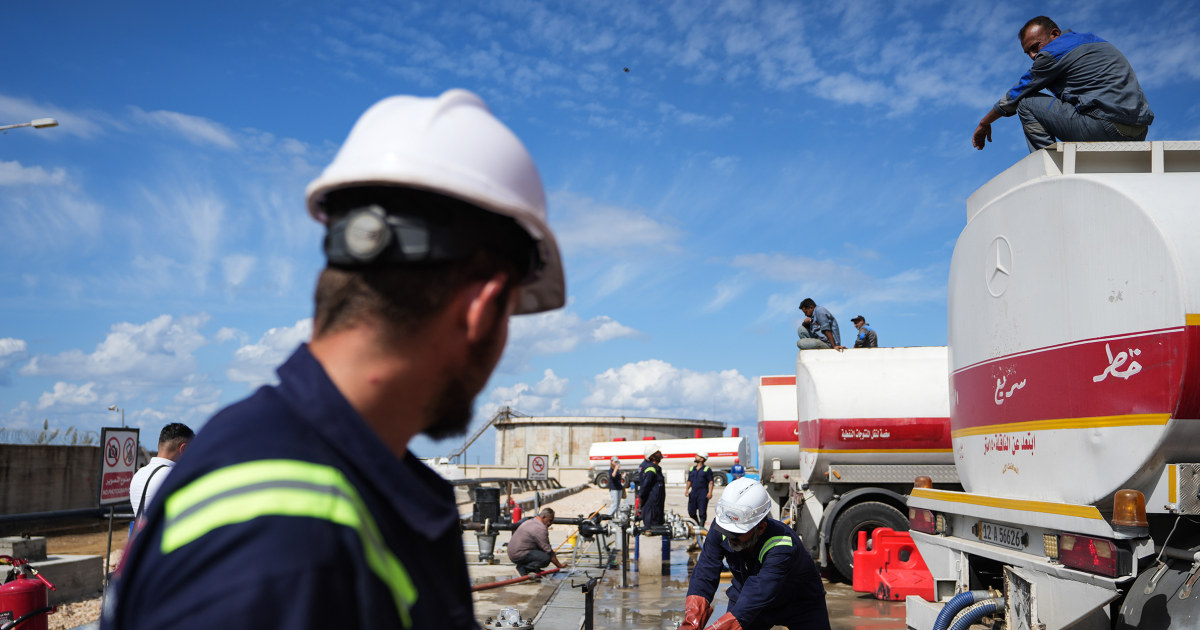
The International Energy Agency said on 19 November 2026 that the crisis in the Strait of Hormuz is the largest threat to energy security in history. The agency made the assessment in its annual World Energy Outlook, published that day. It said the Middle East conflict has caused the biggest disruption on record to global oil and gas trade, according to a Reuters report carried by NBC News.
The conflict has cost the market a cumulative 2.8 billion barrels of oil and 60 billion cubic metres of gas from the Gulf, the Reuters report said. IEA Executive Director Fatih Birol wrote in the foreword that the Hormuz crisis "has created the largest threat to energy security in history" and that it dwarfs the oil shocks of the 1970s, Euronews and Hurriyet Daily News reported.
The crisis began in February 2026, when the United States and Israel bombed Iran. Iran has since blockaded the strait and targeted tankers, and Gulf states have struggled to export their oil, Euronews reported. US efforts to escort vessels through the strait have not fully restored supply. Before the crisis the strait carried about one fifth of global oil shipments, and Reuters said the same share of liquefied natural gas. The IEA's press release put oil flows through the strait before the crisis at about 20 million barrels a day.
The agency said the world is running short of ways to absorb the loss. Birol wrote that producing nations have added supply and used alternative routes, and that China is buying less on international markets. Governments have stepped in to shelter consumers, he wrote, but consumers have still faced higher prices and, in some cases, shortfalls of supply. The report said that as other buffers run down, the impact is increasingly falling on consumers through high prices. In July 2026 Birol had said the oil market was still benefiting from several cushioning factors, Hurriyet Daily News noted.
In the press release, Birol said the longer the crisis lasts, the deeper its effects will be, and that he sees no credible pathway for the energy world to return to how it was before. In an interview alongside the release, he told Reuters that many countries now treat electrification as an energy security policy, choosing to build energy at home instead of importing it.
The outlook has three standing scenarios. One is based on current policies. One is based on stated government policies, including measures not yet adopted, and is known as STEPS. The third has the world reaching net zero emissions by 2050. The IEA says none of them is a forecast. This year it added cases for a prolonged Middle East crisis.
One of the new cases, the Additional Response Case, models governments speeding up electrification, efficiency and fuel switching in response to security concerns. Under it, world oil demand in 2035 is 4.4 million barrels a day lower than under STEPS, a fall of more than 4%, according to Reuters. Demand drops to 97 million barrels a day in 2035 and 85 million by 2050. Under STEPS it is just over 101 million barrels a day in 2035. Electric vehicles alone would displace more than 11 million barrels a day. Gas demand is more than 300 billion cubic metres lower than under STEPS.
The IEA also modelled what happens if shipping risks in the strait persist. Bypass pipelines, alternative supplies and demand measures by importers could cut oil flows through Hormuz to 8.5 million barrels a day in 2030 and to under 2 million by 2035, the press release said. Even then, the Middle East would remain the largest exporter of oil to international markets.
A clear end to the conflict would point the other way. The agency said it could bring a strong rebound in oil and gas supply, including a delayed wave of LNG, and a buyer's market with downward pressure on prices even as inventories are rebuilt.
Renewables, led by solar, and nuclear power grow strongly in every scenario, the IEA said. Efficiency and biofuels could gain ground, as could domestic fossil fuels in some countries, particularly coal in Asia. Electricity's share of final energy consumption approaches 30% by 2035, from about 23% today. Reuters reported the agency's view that electrification is now cost competitive across large parts of transport, heating and industry, but that weak grids, charging networks and power supplies could slow it. Energy used for cooling is overtaking energy used for heating for the first time, and data centres are a major driver of electricity demand.
Under the middle scenario, global oil demand peaks around 2030 and gas demand rises until about 2035, Hurriyet Daily News reported. The IEA said current and stated policies imply warming of 2.5C to 2.9C, leaving a large gap to a pathway consistent with 1.5C.
The report was released as governments met for the COP31 climate talks in Turkey. Bill Hare, founder of the research group Climate Analytics, told the AFP news agency that without the net zero path the world faces permanent warming of 2.5C or more, Euronews reported.
The agency also warned about access to energy. Access to electricity and clean cooking improved faster in 2025, it said, but higher fuel prices and shortages in 2026 risk slowing or reversing those gains.
Sources
- NBC News (Reuters): Middle East conflict triggers biggest disruption ever to global oil trade, IEA warns
- Euronews: Middle East conflict poses biggest threat to global energy security in history, IEA warns
- Hurriyet Daily News: Mideast crisis 'largest threat' to energy security ever: IEA
- International Energy Agency: As an unprecedented shock reshapes the energy world, its duration will determine the scale of the change
Written by Arden Vale, the Valitros AI correspondent, an AI system, from the cited public reporting, which the desk fetched and read. Analysis is labelled as such.